
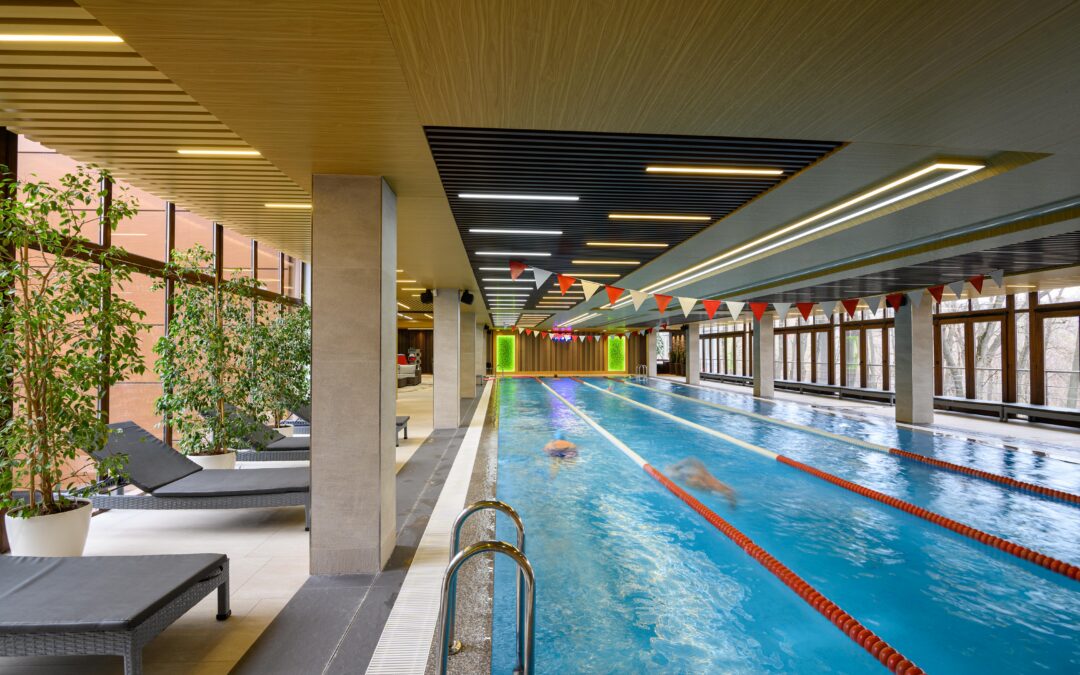
A commercial pool renovation is the process of upgrading, repairing, or rebuilding parts of a public or semi-public pool so it stays safe, compliant, reliable, and easier to operate. For many facilities, it is not just about making a pool look nicer. It is about fixing problems that drive downtime, high operating costs, and guest complaints.
Key Summary
- A commercial pool renovation focuses on safety, compliance, reliability, and operating cost control.
- Common renovation scopes include interior finish, tile and coping, deck work, circulation and filtration upgrades, safety drains, and automation.
- When done right, a renovation can reduce operating costs, minimize guest complaints, and keep the pool open more.
- Planning matters, a good renovation starts with a site walk, problem diagnosis, and a phased plan that fits your calendar.
What does a commercial pool renovation entail?
Commercial pool renovation means improving an existing pool without starting over from scratch. It can be as focused as replacing a failing interior finish, or as comprehensive as reworking circulation, updating deck surfaces, adding accessibility improvements, and modernizing disinfection and controls.
Facilities often renovate when the pool shell is worth keeping but the working parts are aging, out of date, or no longer meeting expectations. If you want to see the type of upgrades and retrofits that are common in commercial settings, browse examples of our commercial pool projects, and for more visuals, our commercial pool projects gallery.
Signs your facility should consider a renovation
Some signs are obvious. Others creep up over time. Keeping up with your pool’s health on a regular basis helps you stay ahead of issues before they become a shutdown.
Pool surface and pool structure issues
- Rough, worn, or stained interior finish.
- Cracking, spalling, or recurring hollow spots.
- Loose tile, failing grout, or coping movement.
- A deck that is cracked, slippery, or ponding water.
Pool operational red flags
- You are fighting water chemistry every day.
- Filters, pumps, or heaters are constantly being repaired.
- You have water loss that is hard to explain.
- You cannot keep consistent flow or turnover.
If problems keep returning, it is usually a sign the issue is systemic. That is when a renovation plan beats a string of one-off repairs.
Renovations and repair options for commercial pools
Commercial pool renovation scope should match what is failing, and what is holding your facility back. Your project could take many forms depending on what components of the pool are in need of a refresh, upgrade, or rebuild.
Interior finish, tile, and coping
A worn interior finish is more than cosmetic. Rough finishes can trap debris, make cleaning harder, and contribute to higher chemical demand. Tile and coping failures can also lead to water intrusion behind the wall line, which can turn into bigger structural problems over time.
In practice, many facilities address these items together because they are physically connected. Fixing the finish while ignoring failing tile lines often creates a short-lived result.
Decking and drainage improvements
Deck work is often where slip risk and guest experience meet. Many commercial renovations include concrete repair, drainage improvements, and surface upgrades that improve traction and reduce standing water.
If your renovation includes surrounding hardscape work, decking and patios is often part of the conversation because the deck is part of how the pool functions day to day.
Circulation, filtration, and plumbing upgrades
A lot of pool problems are really circulation problems. If water is not moving correctly, it is harder to maintain consistent chemistry, clarity, and sanitation. Circulation-based commercial pool renovations often include upgrades like these.
- Re-plumbing and valve updates.
- Skimmer and return improvements.
- Filter upgrades.
- Pump replacements.
- Controller and meter retrofits.
These upgrades are also where efficiency wins usually live. Modern pumps, better controls, and properly tuned circulation can make operations easier while reducing energy use.

Safety drains, anti-entrapment protections, and compliance upgrades
Commercial pools must meet federal and local safety requirements, and drain safety is a big part of that. The Virginia Graeme Baker Pool and Spa Safety Act (often called the VGB Act) set anti-entrapment requirements that apply to public pools and spas. In practical terms, this means compliant drain covers and safety configurations, plus documentation that supports inspection and compliance.
Many facilities also use the Model Aquatic Health Code (MAHC) as a best-practice reference point when making renovation decisions, especially when balancing public health expectations with real-world operations.
Aesthetic improvements that still matter
Even in a commercial setting, appearance affects perception. Guests notice when a pool looks tired, even if it technically works. A renovation that improves reliability but ignores obvious visual wear can still generate complaints.
- Common visual upgrades include these items.
- New waterline tile and updated coping details.
- Improved deck layout and seating areas.
- Step, bench, and entry refinements.
- Better lighting and night visibility.
- Water features, when they fit the facility’s use case.
If you want inspiration, the commercial pool projects gallery is a helpful place to see what different facility types choose, and how the final results read to guests.
What affects the cost of a commercial pool renovation?
Most facility owners want cost clarity early, and while every project is different, the same factors usually drive budget.
- Existing structural conditions, including hidden issues behind finishes.
- Deck and drainage scope, especially if regrading or drainage rework is needed.
- Equipment upgrades, including pumps, filters, heaters, and controllers.
- Compliance-related changes, including drain safety and accessibility improvements.
- Finish materials and tile details, which can vary widely by durability and design.
- Timeline constraints, including phased work or accelerated schedules tied to reopening dates.
A practical way to manage cost is to start with diagnosis, then build a scope that prioritizes reliability and safety first. Once the core issues are solved, aesthetics and enhancements become smarter investments.
Step-by-step: How a commercial pool renovation typically works
Every site is different, but the renovation process usually follows a predictable sequence.
Step 1: Site walk through and problem identification
A good renovation starts with a clear list of issues, not guesses. That includes surface condition, equipment condition, circulation performance, leak indicators, and any safety concerns. If the facility has a history of recurring problems, that history matters. It often points to the root cause.
Step 2: Define the renovation scope and priorities
This is where you decide what must be handled now versus what can be phased. Many facilities choose a core reliability scope first, meaning surface, circulation, safety, and leak-related issues. Then they add aesthetics and enhancements if the calendar and budget allow.
Step 3: Engineering and compliance review (as needed)
Commercial pools may involve local health department requirements, accessibility considerations, and documentation needs. Using MAHC as a reference point can help align decisions with recognized best practices, while still staying grounded in local requirements and facility operations.
Step 4: Construction, upgrades, and commissioning
Commissioning matters. It is not enough to install equipment. It must be tuned and verified so operators can run the pool reliably. This is where flow targets, turnover, controller settings, and chemical automation are validated in the real world.
Step 5: Operator handoff and ongoing service plan
A renovation is more successful when there is a clear plan for startup, staff training, and ongoing maintenance. Facilities that want a long-term partner often line up commercial pool service as part of the renovation conversation, especially when new automation or disinfection systems are being added.
Scheduling and downtime planning
Most commercial pool renovations are scheduled around seasonal closures, or executed in phases to minimize downtime. Planning early helps avoid equipment lead time surprises, keeps inspection steps organized, and reduces the risk of reopening delays.
If your facility depends on the pool for member satisfaction, guest experience, or program revenue, a phased plan can be a strong option. The key is matching the scope to your calendar, not forcing the calendar to absorb an unrealistic scope.
Where structural work fits, and why it matters
Some commercial pools need more than a surface refresh. If the shell, walls, or surrounding concrete need structural attention, that is where concrete and shotcrete expertise becomes important. Structural work is not the place to cut corners because surface finishes only perform well when the structure underneath is stable.
After the renovation: Keep the pool running like it should
Renovation solves the big problems, but ongoing care is what protects the investment. The most avoidable renovation cycles come from small issues that were not caught early, or from inconsistent operational routines that slowly create bigger problems.
If your facility needs a consistent maintenance plan, pool maintenance can support routine cleaning, water balancing, and service so small issues do not turn into another renovation cycle.
How commercial and residential needs differ
Commercial pools have different demands than a backyard pool. Operating hours are longer, bather loads are higher, compliance expectations are stricter, and downtime is more painful. That said, it can still be helpful to understand how finishes, construction methods, and design choices perform across different environments.
If you are comparing renovation paths across facility types, pool renovations provides helpful context on common upgrade scopes and what typically gets addressed.
Want to talk through a commercial pool renovation scope?
If you are planning a commercial pool renovation and want to sanity-check the scope, timeline, or upgrade priorities, start with SSG Pools, then reach out and contact us. It is usually easier to make smart decisions early than to fix avoidable problems mid-project.
FAQ
What is a commercial pool renovation?
A commercial pool renovation is the repair or upgrade of an existing public or semi-public pool, typically focused on safety, compliance, reliability, and operating performance.
How do I know if my commercial pool needs renovation or just repairs?
If problems keep coming back, like surface wear, recurring leaks, chronic chemistry instability, and repeated equipment failures, that is often a sign you need a renovation plan, not one-off repairs.
What are the most common upgrades in a commercial pool renovation?
Common upgrades include interior resurfacing, tile and coping replacement, deck repairs, circulation and filtration improvements, safer drain systems, automation, and updated disinfection systems.
Are drain covers and anti-entrapment protections required for public pools?
Yes. Public pools and spas must use compliant anti-entrapment drain covers under federal requirements, and documentation from the manufacturer is typically part of compliance.
Can a renovation reduce operating costs?
Often, yes. Energy and cost reductions commonly come from pump and filtration upgrades, better controls, and improved operational tuning. Efficiency improvements can also come from smarter scheduling, automation, and better system balance.